
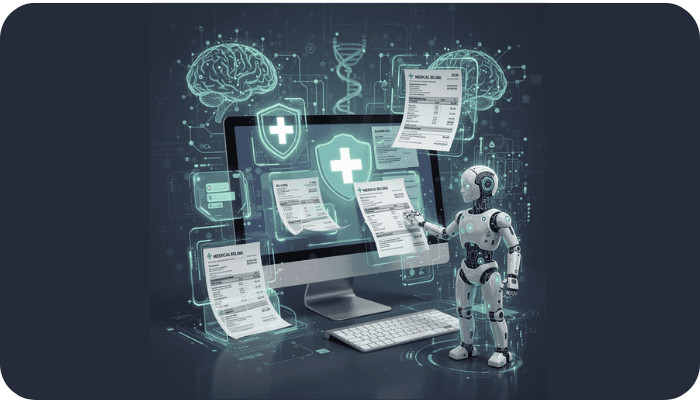
The healthcare industry is experiencing a major shift in financial operations as artificial intelligence becomes integrated into medical billing systems. Hospitals and clinics worldwide are facing increasing administrative complexity, insurance verification challenges, and claim denials that directly affect revenue.
Recent developments in healthcare technology show how artificial intelligence can dramatically improve billing efficiency. A collaboration between Waystar and Google Cloud demonstrates how AI-driven automation is transforming Revenue Cycle Management by reducing billing errors and preventing insurance claim denials.
According to industry data, advanced AI-powered systems have helped healthcare providers prevent more than $15 billion in denied claims while reducing the time spent on denial management by nearly 90 percent.
This innovation marks a major evolution in healthcare financial management, especially for rapidly growing healthcare markets such as the United Arab Emirates and the broader Middle East.
What Is Revenue Cycle Management in Healthcare?
Revenue Cycle Management (RCM) refers to the financial process healthcare providers use to track patient services from appointment scheduling to final payment collection.
The RCM process includes several operational stages:
- Patient registration and data collection
- Insurance eligibility verification
- Medical coding and documentation
- Claim submission to insurance companies
- Payment processing and reconciliation
- Denial management and appeals
- Financial reporting and analytics
A well-structured revenue cycle ensures healthcare organizations receive accurate and timely reimbursements for services provided.
However, inefficiencies in the billing workflow often lead to claim rejections and delayed payments.
Why Claim Denials Are a Major Challenge in Medical Billing
Claim denials remain one of the most significant financial challenges for healthcare providers.
Industry reports suggest that 20–30 percent of healthcare claims are denied or delayed due to administrative errors.
Common reasons for claim denials include:
- Incorrect or incomplete medical coding
- Missing patient information
- Insurance eligibility issues
- Documentation errors
- Policy coverage limitations
- Late claim submissions
When claims are denied, billing teams must review the claim, correct errors, and resubmit documentation to insurance providers. This process consumes significant time and resources, increasing operational costs.
How Artificial Intelligence Is Transforming Medical Billing
Artificial intelligence is rapidly becoming one of the most powerful technologies in healthcare revenue management.
AI systems analyze large volumes of billing and patient data to detect patterns that lead to claim denials and payment delays.
Key ways AI improves medical billing include:
Predictive Denial Prevention
AI algorithms analyze historical billing data to identify claims that are likely to be denied. Billing teams can correct issues before submission, improving approval rates.
Automated Data Processing
AI systems automatically extract and validate data from electronic health records and billing platforms, reducing manual entry errors.
Improved Medical Coding Accuracy
Machine learning tools assist medical coders by analyzing clinical documentation and suggesting the most appropriate billing codes.
Real-Time Claim Monitoring
AI-powered platforms track claims throughout the reimbursement cycle, identifying delays and enabling faster follow-up actions.
These capabilities significantly improve operational efficiency and financial outcomes for healthcare providers.
The $15 Billion Breakthrough in Denial Prevention
A recent AI-driven initiative developed by Waystar, using infrastructure from Google Cloud, demonstrates the real impact of intelligent revenue cycle systems.
Their AI platform analyzes billing workflows and insurance data to identify potential claim errors before submission.
The system has reportedly helped healthcare organizations prevent more than $15 billion in denied claims within a single year.
Additionally, the technology has reduced denial management workload by approximately 90 percent, allowing billing teams to focus on more strategic tasks.
This innovation illustrates how AI can transform medical billing from a reactive process into a proactive financial management system.
Why Healthcare Providers Are Adopting AI-Powered RCM Solutions
Healthcare organizations are adopting AI-powered revenue cycle systems for several key reasons.
Rising Administrative Costs
Billing administration accounts for a large portion of healthcare operational expenses. AI automation reduces manual work and improves workflow efficiency.
Complex Insurance Requirements
Insurance policies and reimbursement guidelines are increasingly complex. AI tools help ensure claims comply with payer requirements.
Demand for Faster Payments
Hospitals and clinics require consistent cash flow to maintain operations. Automated claim processing accelerates reimbursement timelines.
Compliance and Accuracy
Healthcare providers must follow strict documentation and billing regulations. AI-driven validation systems help ensure compliance and reduce errors.
The Growing Importance of AI in Middle East Healthcare Systems
Healthcare systems across the Middle East are undergoing rapid digital transformation.
Countries such as the United Arab Emirates are investing heavily in smart healthcare technologies and digital hospital infrastructure.
Cities like Dubai and Abu Dhabi are leading innovation in healthcare IT systems, electronic medical records, and automated revenue cycle management.
As healthcare demand continues to grow, hospitals and clinics in the region are exploring advanced billing technologies and outsourcing solutions to improve operational efficiency.
The Role of Professional Medical Billing Services
While artificial intelligence improves automation and analytics, human expertise remains essential in managing complex billing processes.
Professional medical billing providers offer specialized services such as:
- Accurate medical coding and documentation review
- Insurance claim submission and tracking
- Denial analysis and appeal management
- Payment reconciliation and reporting
- Compliance monitoring and regulatory support
Companies like Escrow Healthcare Billing Services support healthcare organizations by providing efficient revenue cycle solutions designed to reduce claim denials and improve financial performance.
By combining modern billing technologies with experienced professionals, healthcare providers can achieve greater accuracy and operational efficiency.
Benefits of AI-Enhanced Revenue Cycle Management
Healthcare organizations adopting AI-driven billing systems gain several important advantages.
Reduced Claim Denials
Predictive analytics helps identify potential billing issues before claims are submitted.
Faster Reimbursement Cycles
Automated workflows accelerate insurance claim processing and payment collection.
Improved Financial Transparency
Advanced reporting tools provide real-time insights into revenue performance.
Operational Efficiency
Automation reduces administrative workload and improves productivity.
Better Patient Financial Experience
Transparent billing processes improve communication and reduce confusion for patients.
Future Trends in AI-Powered Healthcare Revenue Management
The future of medical billing will be shaped by emerging technologies and data-driven decision-making.
Key trends expected to shape the industry include:
- AI-powered predictive billing analytics
- Automated coding systems
- Voice-enabled billing support tools
- Integrated healthcare data platforms
- Cloud-based revenue cycle management systems
These innovations will help healthcare organizations operate more efficiently while improving financial sustainability.
Conclusion
Artificial intelligence is transforming healthcare financial management by improving the accuracy and efficiency of medical billing operations.
The collaboration between Waystar and Google Cloud demonstrates how AI-powered revenue cycle technologies can prevent billions of dollars in denied claims while dramatically reducing administrative workload.
For healthcare providers worldwide—including those in the United Arab Emirates and the broader Middle East—adopting AI-driven RCM solutions is becoming essential for maintaining financial efficiency.
By combining intelligent automation with professional billing expertise, healthcare organizations can reduce claim denials, accelerate reimbursements, and focus more on delivering high-quality patient care.
Frequently Asked Questions
What is AI in medical billing?
AI in medical billing refers to the use of artificial intelligence technologies to automate billing workflows, analyze claim data, prevent denials, and improve revenue cycle efficiency.
How does AI prevent claim denials?
AI analyzes historical billing patterns and insurance requirements to identify potential errors before claims are submitted, allowing billing teams to correct issues in advance.
Why is revenue cycle management important in healthcare?
Revenue Cycle Management ensures healthcare providers receive accurate and timely payments for medical services, supporting financial stability.
Are healthcare providers in the Middle East adopting AI billing systems?
Yes. Healthcare organizations in regions like the United Arab Emirates are increasingly adopting digital healthcare technologies and automated billing systems.