
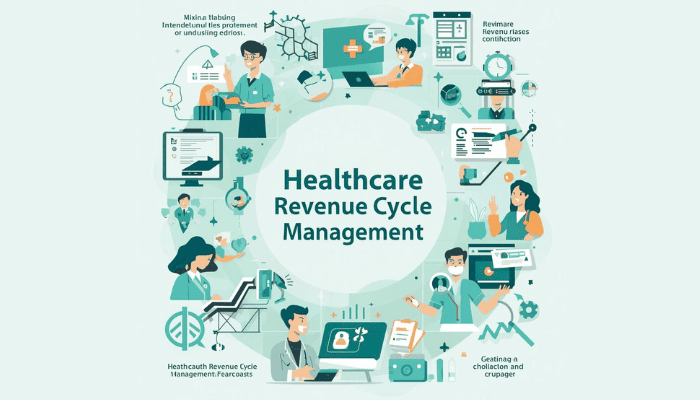
The healthcare Revenue Cycle Management (RCM) ecosystem in the United Arab Emirates is entering a new phase of digital maturity. Across Dubai, Abu Dhabi, Sharjah, and the wider MENA region, hospitals and clinics are facing increasing financial pressure due to claim denials, insurance complexities, and strict regulatory compliance standards.
Recent regional strategic collaborations — including the 2025 expansion initiative between Claritev Corporation and Burjeel Holdings — highlight a broader transformation: healthcare finance in the UAE is becoming AI-driven, analytics-based, and compliance-focused.
Although that collaboration was announced in 2025, its implementation and market impact continue into 2026, signaling long-term growth in healthcare financial technology across the UAE and MENA.
This blog provides a comprehensive, locally optimized, informational guide covering:
- The state of healthcare RCM in Dubai, Abu Dhabi, and the UAE
- Why claim denials are increasing
- Local regulatory requirements (DHA, DOH, MOHAP)
- Operational challenges faced by UAE clinics
- AI-driven solutions reshaping RCM
- A step-by-step revenue optimization roadmap
- EEAT-based trust framework
- Frequently asked questions for UAE healthcare providers
The Current Healthcare RCM Landscape in the UAE
The UAE healthcare system is predominantly insurance-driven. Reimbursement cycles depend on strict documentation, coding precision, and payer compliance. Major urban centers such as Dubai and Abu Dhabi have particularly sophisticated insurance frameworks.
Healthcare providers must align with regulatory bodies such as:
- Dubai Health Authority
- Department of Health Abu Dhabi
- Ministry of Health and Prevention
Each authority has specific billing standards, audit policies, and documentation requirements.
In 2026, RCM in the UAE is influenced by:
- Increased insurance audits
- Stricter medical necessity reviews
- Expansion of private healthcare facilities
- Growth in specialty clinics
- Digital health record integration
- AI-powered payer analytics
Healthcare finance has moved from basic billing processing to strategic revenue optimization.
Local Problem 1: Rising Claim Denials in Dubai and Abu Dhabi
Many Dubai polyclinics and Abu Dhabi specialty centers report rising denial rates due to:
- Missing or delayed pre-authorizations
- Coding inconsistencies
- Incorrect patient insurance classification
- Insufficient documentation
- Policy exclusions
Denials delay reimbursements and increase operational costs. For smaller clinics in Sharjah or Ajman, even minor delays can significantly impact monthly cash flow.
Why Denials Are Increasing in the UAE
- Insurance providers are tightening fraud prevention systems.
- Regulatory authorities are increasing compliance audits.
- Payer rules frequently change.
- Documentation standards are more detailed than before.
Without a structured RCM framework, providers risk revenue leakage.
Local Problem 2: Compliance Pressure from UAE Health Authorities
Healthcare billing must strictly follow:
- DHA coding guidelines in Dubai
- DOH payer compliance in Abu Dhabi
- MOHAP regulations for federal regions
Non-compliance can result in:
- Financial penalties
- Contract disputes with insurers
- Audit risks
- Reputational damage
Documentation mismatches between clinical notes and coded services are one of the most common compliance risks.
Local Problem 3: Fragmented Billing Systems in Mid-Sized Clinics
Many UAE clinics still operate with:
- Manual billing workflows
- Disconnected practice management software
- Limited denial analytics tracking
- No centralized KPI dashboards
Without real-time financial visibility, revenue optimization becomes reactive instead of proactive.
The Shift Toward AI-Driven Healthcare RCM in the UAE
The expansion of advanced RCM solutions across MENA reflects growing demand for:
- Automated claim validation
- Predictive denial detection
- Revenue integrity audits
- AI-assisted coding review
- Payer rule automation
AI-powered RCM systems now help providers:
- Detect claim errors before submission
- Analyze denial patterns by payer
- Monitor documentation compliance
- Improve first-pass claim acceptance rates
Hospitals in Dubai and Abu Dhabi are increasingly investing in these technologies to reduce administrative burdens.
Solution Framework: How UAE Healthcare Providers Can Optimize Revenue
1. Implement Pre-Submission Claim Scrubbing
AI-driven claim scrubbing ensures:
- Coding alignment
- Missing field detection
- Insurance validation
- Duplicate claim prevention
This significantly reduces rejection rates.
2. Track Denial Root Causes by Emirate and Payer
For example:
- Dubai-based clinics may see more authorization-related denials.
- Abu Dhabi providers may face documentation-based rejections.
Segmented denial tracking allows targeted corrective action.
3. Conduct Monthly Coding Audits
Regular internal audits help:
- Prevent overcoding and undercoding
- Ensure compliance with DHA and DOH guidelines
- Improve documentation quality
Audit readiness builds long-term financial stability.
4. Automate Eligibility and Authorization Checks
Automated systems verify:
- Patient insurance coverage
- Service eligibility
- Pre-authorization status
This reduces front-desk administrative errors.
5. Establish Clear Revenue KPIs
Every UAE healthcare provider should track:
- First-pass claim acceptance rate
- Average days in accounts receivable
- Net collection ratio
- Denial percentage by payer
- Monthly revenue trend analysis
Data-driven decisions improve sustainability.
Strategic RCM Roadmap for UAE Clinics in 2026
Step 1: Conduct a full revenue audit
Step 2: Identify top 10 denial reasons
Step 3: Align documentation with coding standards
Step 4: Implement claim scrubbing technology
Step 5: Train staff on compliance requirements
Step 6: Monitor KPIs monthly
Revenue optimization is continuous, not one-time.
AI Overview Section: Quick Summary for Decision-Makers
- Healthcare RCM in the UAE is expanding due to stricter insurance scrutiny and regulatory enforcement.
- AI-powered solutions reduce claim denials and improve revenue integrity.
- Dubai and Abu Dhabi clinics face rising documentation compliance pressure.
- Advanced RCM systems provide predictive analytics and real-time dashboards.
- Strategic revenue management is critical for financial sustainability in 2026.
Healthcare RCM Providers
To build trust in the UAE healthcare ecosystem, RCM providers must demonstrate:
Experience
Hands-on expertise with regional insurance networks and payer systems.
Expertise
Certified medical coders familiar with DHA and DOH standards.
Authoritativeness
Documented processes, transparent reporting, and measurable performance metrics.
Trustworthiness
Secure patient data handling, ethical billing practices, audit compliance readiness.
Healthcare revenue management directly impacts patient care delivery. Financial accuracy is a responsibility, not just a service.
Future Trends in UAE Healthcare Revenue Cycle Management
The next stage of RCM evolution in the UAE will likely include:
- Predictive denial forecasting using machine learning
- Integration with electronic health records
- Automated compliance alerts
- Blockchain-secured billing data
- Value-based reimbursement tracking
Healthcare providers who adopt technology early will maintain competitive advantage.
Why Localized RCM Matters in the UAE
Unlike generic international billing systems, UAE healthcare billing requires:
- Multi-payer familiarity
- Emirate-specific compliance knowledge
- Cultural and insurance workflow understanding
- Arabic-English documentation handling
Localization improves claim accuracy and regulatory alignment.
Conclusion
Healthcare Revenue Cycle Management in the UAE is evolving rapidly. Increased insurance complexity, stricter compliance enforcement, and digital transformation initiatives are reshaping how hospitals and clinics manage financial operations.
Strategic industry expansions across the MENA region reflect strong investment in AI-powered RCM technologies. However, technology alone is not enough. Structured processes, regulatory awareness, and data-driven decision-making are essential.
Healthcare providers in Dubai, Abu Dhabi, Sharjah, and across the UAE must prioritize revenue optimization strategies that combine compliance, analytics, and automation.
Financial stability supports clinical excellence. In 2026, strong RCM systems are not optional — they are foundational.
Frequently Asked Questions (FAQ)
What is Revenue Cycle Management in UAE healthcare?
Revenue Cycle Management refers to managing patient billing, insurance claims, coding, reimbursement tracking, and financial reporting from appointment scheduling to final payment collection under UAE insurance regulations.
Why are medical billing denials increasing in Dubai?
Denials are increasing due to stricter payer rules, documentation gaps, coding errors, and enhanced audit enforcement by insurance providers and regulatory authorities.
How can Abu Dhabi clinics reduce claim rejections?
Clinics can reduce rejections by implementing pre-submission claim scrubbing, conducting regular coding audits, automating insurance eligibility checks, and tracking denial root causes.
Are DHA and DOH compliance audits common?
Yes. Regulatory authorities conduct periodic audits to ensure accurate billing, documentation alignment, and adherence to coding standards.
Is outsourcing RCM allowed in the UAE?
Yes, outsourcing is permitted as long as patient data security, compliance standards, and regulatory guidelines are maintained.
What KPIs should UAE healthcare providers monitor?
- First-pass claim acceptance rate
- Denial percentage
- Accounts receivable aging
- Net collection ratio
- Payer turnaround time